
THC Studies. Explained.

  • One Tiny THC Dose Reduces Anxiety-Like Behavior in Mice

    One extremely small dose of THC reduced anxiety-like behavior in mice exposed to ongoing stress in a model of major depressive disorder.

    The improvement was observed three weeks later, after THC had cleared from their systems, alongside changes in brain genes involved in stress responses and nerve-cell communication.

    These findings support further research into ultra-low-dose THC for anxiety associated with depression.

    Study: Acute Ultra Low Dose THC Attenuates Anxiety-Like Behavior in a Mouse Model for Major-Depressive Disorder

    thcXplained: One Tiny THC Dose Reduces Anxiety-Like Behavior in Mice

    Access study at THCtotalhealthcare.com

  • THC Increases Growth-Factor Release From Stem Cells

    THC increased the release of growth factors from adipose-derived stem cells and adipose tissue.

    These growth factors are involved in tissue repair, blood-vessel growth, cell survival, and regeneration.

    The findings suggest THC can change how stem cells signal to surrounding tissue and support healing processes.

    Study: Δ9-Tetrahydrocannabinol Increases Growth Factor Release by Cultured Adipose Stem Cells and Adipose Tissue in Vivo

    thcXplained: THC Increases Growth-Factor Release From Stem Cells

    Access study at THCtotalhealthcare.com

  • THC Restores the Lung’s Protective Airway Barrier

    Inflammation can make the lining of the airways more “leaky,” weakening its protective barrier.

    In this study, THC reversed that increased permeability and helped restore the airway barrier.

    The effect worked through CB2 receptors, showing that cannabinoid signaling was directly involved.

    Study: Δ9-Tetrahydrocannabinol Reverses TNFα-Induced Increase in Airway Epithelial Cell Permeability Through CB2 Receptors

    thcXplained: THC Restores the Lung’s Protective Airway Barrier Through CB2 Receptors

    Access study at THCtotalhealthcare.com

  • THC Inhibits Endometrial Cancer Invasion and Spread

    THC reduced endometrial cancer cell growth and movement in laboratory studies.

    THC also suppressed EMT, a process that helps cancer cells become more invasive, and reduced MMP-9, an enzyme involved in breaking through surrounding tissue.

    The findings suggest THC interfered with mechanisms involved in cancer invasion and metastasis.

    Study: Δ9-Tetrahydrocannabinol Inhibits Epithelial-Mesenchymal Transition and Metastasis by Targeting Matrix Metalloproteinase-9 in Endometrial Cancer

    thcXplained: THC Inhibits Endometrial Cancer Invasion and Spread

    Access study at THCtotalhealthcare.com
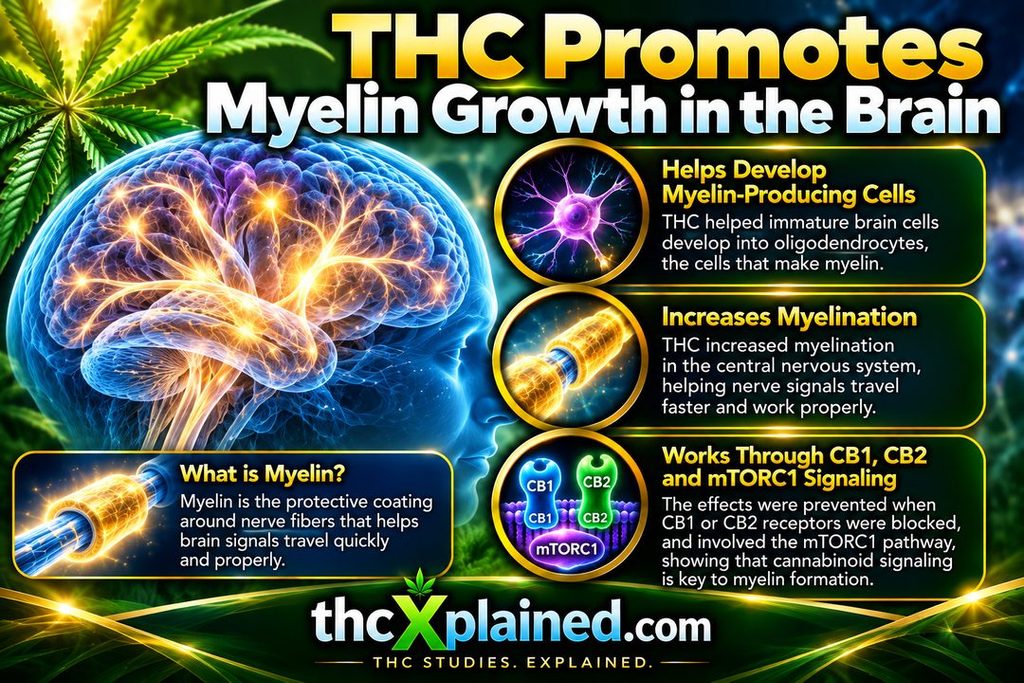
  • THC Promotes Myelin Growth in the Brain

    Myelin is the protective coating around nerve fibers that helps brain signals travel quickly and properly.

    THC helped immature cells develop into oligodendrocytes, the cells that make myelin, and increased myelination in the central nervous system.

    The effect involved CB1, CB2, and mTORC1 signaling, pointing to a direct role for cannabinoid pathways in myelin formation.

    Study: Δ9-Tetrahydrocannabinol Promotes Oligodendrocyte Development and CNS Myelination in Vivo

    thcXplained: THC Promotes Myelin Growth in the Brain

    Access study at THCtotalhealthcare.com
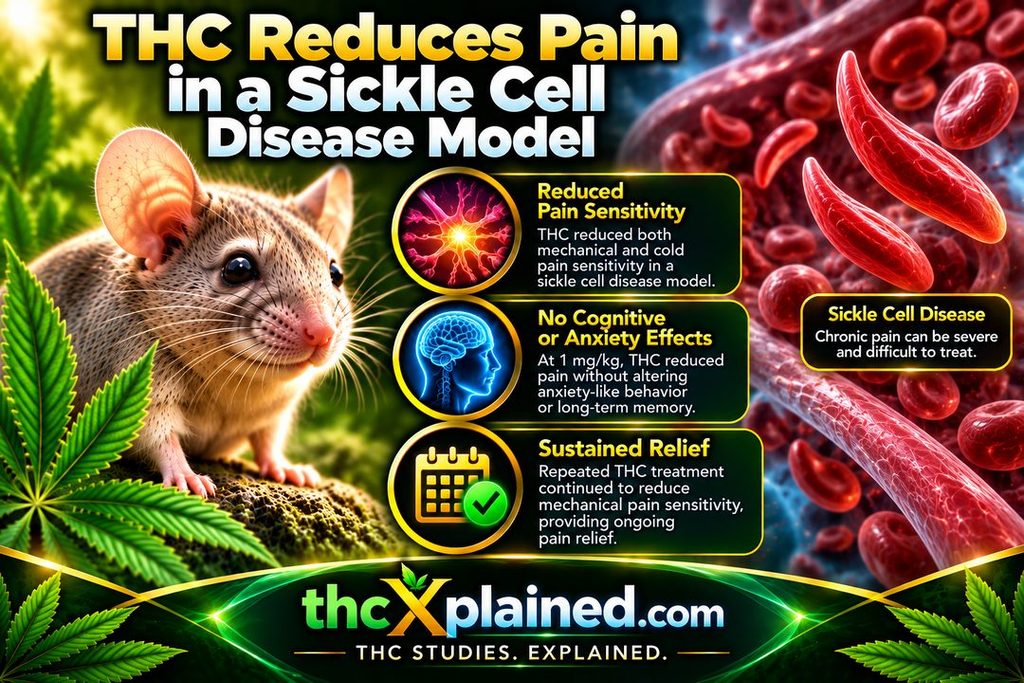
  • THC Reduces Pain in a Sickle Cell Disease Model

    Researchers tested THC in a humanized mouse model of sickle cell disease.

    THC reduced both mechanical and cold pain sensitivity and produced significant pain relief.

    At 1 mg/kg, THC reduced pain without changing anxiety-like behavior or long-term memory.

    Study: Δ9-Tetrahydrocannabinol Alleviates Hyperalgesia in a Humanized Mouse Model of Sickle Cell Disease

    thcXplained: THC Reduces Pain in a Sickle Cell Disease Model

    Access study at THCtotalhealthcare.com
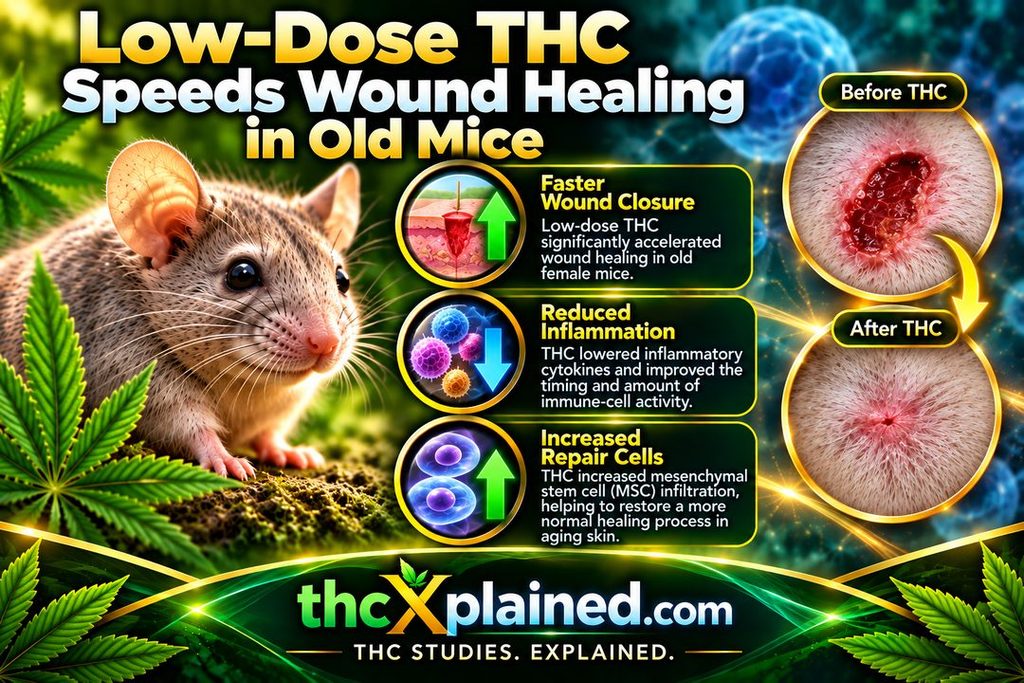
  • Low-Dose THC Speeds Wound Healing in Old Mice

    Researchers gave old wounded female mice a low dose of THC for 21 days.

    THC sped wound closure, reduced inflammatory signals, and increased the movement of repair-related stem cells into the wound.

    The findings suggest THC helped restore a more normal healing process in aging skin.

    Study: A Chronic Low Dose of Δ9-Tetrahydrocannabinol (3 mg/kg/21 d) Reorganizes the Disturbed Wound Healing Process and Accelerates Wound Closure in Old Female Mice

    thcXplained: Low-Dose THC Speeds Wound Healing in Old Female Mice

    Access study at THCtotalhealthcare.com

  • THC Protects the Diabetic Heart

    THC protected diabetic rat hearts from damage caused when blood flow was restored after a period of reduced circulation.

    It reduced heart injury, oxidative stress, and cell death while improving cardiac function.

    The protective effect involved the PTEN/PI3K/Akt pathway, which helps heart cells survive injury.

    Study: Impacts of Delta-9-Tetrahydrocannabinol Against Myocardial Ischemia/Reperfusion Injury in Diabetic Rats: Role of PTEN/PI3K/Akt Signaling Pathway

    thcXplained: THC Helps Protect the Diabetic Heart From Damage When Blood Flow Returns

    Access the study at THCtotalhealthcare.com
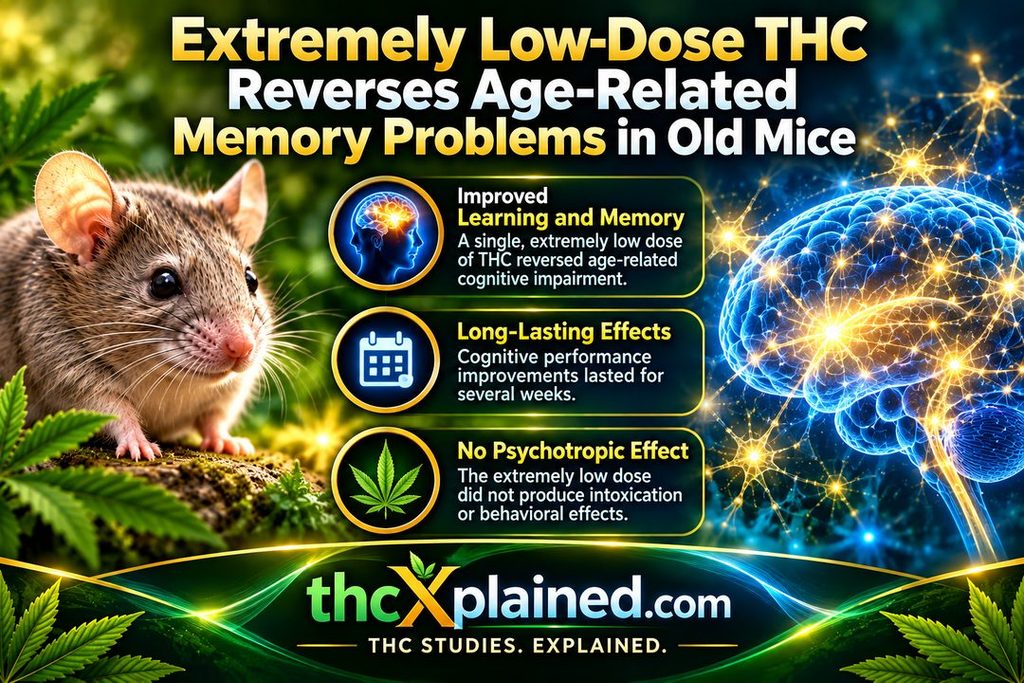
  • Extremely Low-Dose THC Reverses Age-Related Memory Problems in Old Mice

    Researchers gave old mice an extremely low dose of THC.

    The treatment reversed age-related cognitive impairment and improved learning and memory for several weeks.

    The dose was so low that it did not produce psychotropic effects.

    Study: Reversal of Age-Related Cognitive Impairments in Mice by an Extremely Low Dose of Tetrahydrocannabinol

    thcXplained: Extremely Low-Dose THC Reverses Age-Related Memory Problems in Old Mice

    Access study at THCtotalhealthcare.com
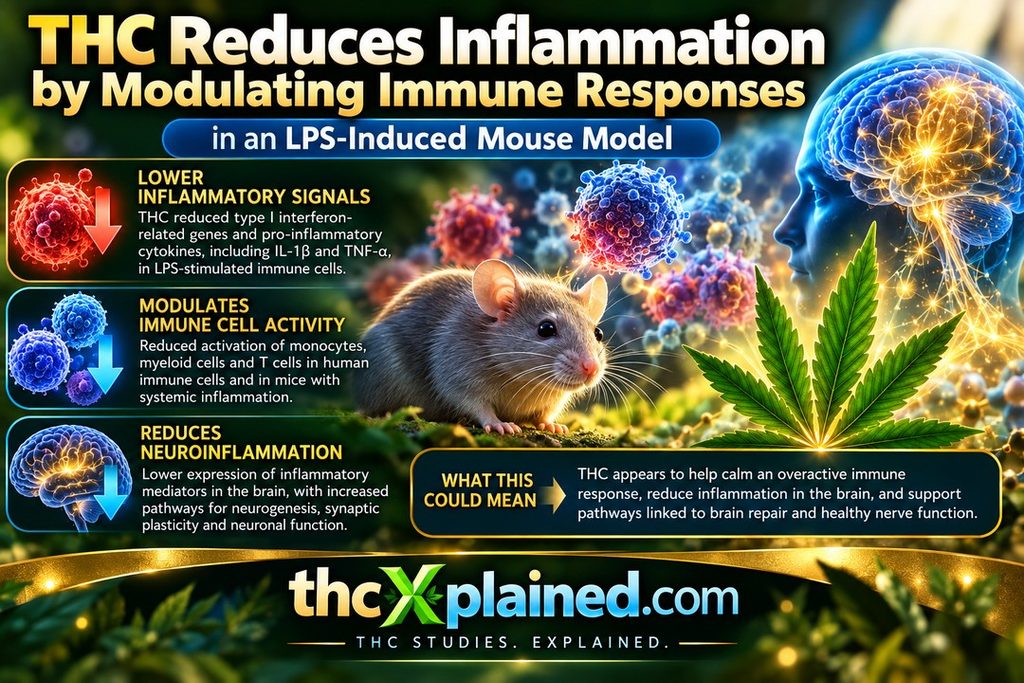
  • THC Reduces Inflammation by Modulating Immune Responses

    THC reduced several inflammatory signals, including IL-1β, TNF-α, and type I interferon-related activity, in immune cells exposed to an inflammatory trigger.

    In mice with systemic inflammation, THC also reduced activation of several immune-cell types and lowered inflammatory signaling in the brain.

    The findings suggest THC may help calm an overactive inflammatory response without simply shutting down the immune system, while also supporting pathways linked to neurogenesis, synaptic plasticity, and neuronal function.

    Study: Delta-9-tetrahydrocannabinol alleviates inflammation by modulating immune responses in LPS-induced murine inflammation model

    thcXplained: THC Reduces Inflammation by Changing How the Immune System Responds

    Access the study at THCtotalhealthcare.com